
Welcome to the Mathematical World!
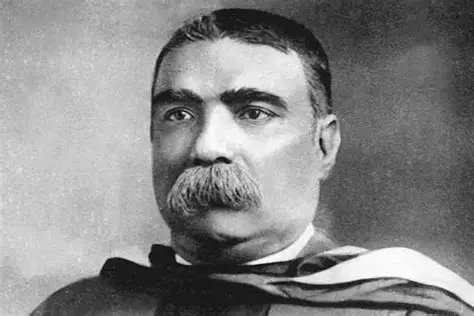
Sir Ashutosh Mukherjee
The Tiger of Bengal and Architect of Modern Education in India
Sir Ashutosh Mukherjee (1864 – 1924), widely known as the “Tiger of Bengal,” was a polymath, mathematician, jurist, and visionary educationist. Born on June 29, 1864, in Calcutta (now Kolkata), India, he demonstrated brilliance early in life. He studied mathematics at Presidency College, Calcutta, earning dual degrees in mathematics and physics, and completed a doctorate in mathematics in 1887. Later, he pursued law and became a successful barrister, yet his passion for mathematics and education never waned.
Mathematical Contributions
Mukherjee specialized in differential geometry and elliptic functions. His doctoral thesis explored the intricate properties of elliptic functions, an area connected deeply with complex analysis and number theory. One of the classical relations in this field is Jacobi’s identity:
\[ \mathrm{sn}^2(u, k) + \mathrm{cn}^2(u, k) = 1, \quad \mathrm{dn}^2(u, k) + k^2 \mathrm{sn}^2(u, k) = 1 \]
Here, sn, cn, and dn are Jacobi elliptic functions, and \(k\) is the elliptic modulus. Mukherjee’s research and teaching helped advance the understanding of these sophisticated concepts in India, making them accessible to scholars who might otherwise have been excluded from such advanced studies during the colonial era.
Educational Leadership
As Vice-Chancellor of the University of Calcutta for five terms (1906–1923), Mukherjee transformed the institution from a mere examination body into a modern research university. He introduced postgraduate programs in science and mathematics, fostered original research, and invited leading scholars from around the world to India.
Legacy and Impact
Mukherjee had an exceptional eye for talent. He discovered and supported Srinivasa Ramanujan, ensuring that his mathematical genius gained recognition, and provided opportunities to C. V. Raman, who later won the Nobel Prize in Physics. He also founded the Calcutta Mathematical Society in 1908, fostering an intellectual environment that nurtured future generations of mathematicians and scientists in India.
Honors and Personality
Knighted in 1911 for his services to education, Ashutosh Mukherjee was nevertheless unafraid to challenge colonial authorities in defense of academic freedom. His fierce independence and dedication earned him the affectionate title “Banglar Bagh” (Tiger of Bengal).
Enduring Influence
Sir Ashutosh Mukherjee passed away on May 25, 1924, but his legacy lives on in the institutions he built and the lives he transformed. By combining mathematical brilliance with administrative acumen, he demonstrated that scholarship, courage, and vision could reshape not only academia but also the intellectual future of a nation.

All rights reserved by the Mathematical Unity
Contact: +8801400044645
Email: mathematicalhorse1453@gmail.com
Our Discord Server: Mathematical Unity [Ulus Riyadiyat]